Let's cut to the chase. The relationship between technology and science isn't just supportive; it's symbiotic and revolutionary. Asking how technology affects science is like asking how the printing press affected literacy. It doesn't just tweak the process; it rewrites the rules. Gone are the days of lone scientists in isolated labs. Today, a particle physicist in Switzerland analyzes data generated by a machine the size of a city, while an epidemiologist in Kenya models disease spread using global satellite feeds and cloud computing. Technology is the primary catalyst, the indispensable infrastructure, and occasionally, the source of our biggest scientific headaches.
The shift is fundamental. It's moved us from observation and manual calculation to simulation, massive data synthesis, and global, real-time collaboration. But this power comes with complexity. More data doesn't always mean more insight. Faster tools can lead to sloppier science if we're not careful. I've seen brilliant researchers drown in terabytes of genomic data because they lacked the computational strategy to match their experimental design.
In This Article
How Technology Empowers the Research Process
Think of the scientific method. Every single step has been supercharged.
Data Collection: From Notebooks to Sensor Networks
Remember sketching galaxies through a telescope? Now, projects like the Vera C. Rubin Observatory will image the entire southern sky every few nights, generating about 20 terabytes of data nightly. In biology, automated DNA sequencers and high-throughput screening robots can process thousands of samples while a researcher sleeps. The scale is incomprehensible without the tech to handle it.
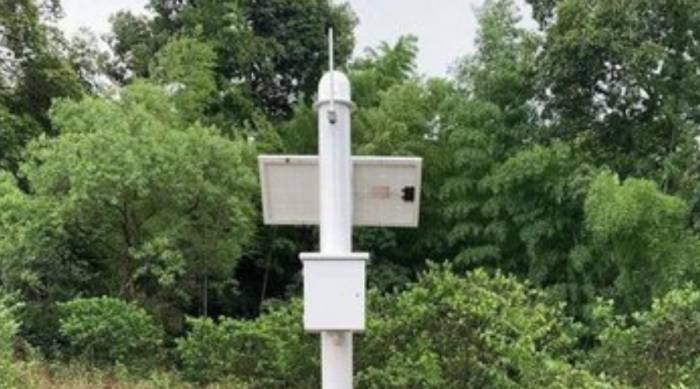
The real game-changer is the diversity of data sources. It's not just lab equipment anymore. Citizen science apps like iNaturalist feed millions of biodiversity observations into global databases. IoT environmental sensors monitor air quality, soil moisture, and ocean acidity in real time, creating living maps of planetary health.
Analysis and Computation: The Brain's Digital Co-Pilot
This is where the rubber meets the road. You can collect all the data in the world, but without analysis, it's noise.
Supercomputing and Simulation: We can now simulate phenomena we can't physically experiment on. Climate models projecting global warming scenarios, quantum chemistry simulations designing new materials, and fluid dynamics testing aircraft designs—all are impossible without massive computational power. The TOP500 list of supercomputers is essentially a leaderboard of scientific potential.
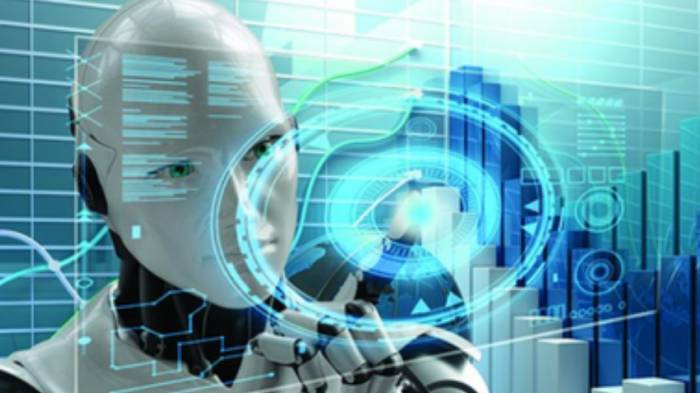
Artificial Intelligence and Machine Learning: This isn't just hype. AI is identifying complex patterns in data that humans would miss. In medicine, AI algorithms are now outperforming radiologists in detecting certain cancers from scans. In protein folding—a problem that stumped biologists for decades—DeepMind's AlphaFold2 provided accurate structures for nearly all known proteins, a breakthrough the journal Science named the 2021 "Breakthrough of the Year."
But here's a subtle error I see often: treating AI as a black-box oracle. Researchers throw data at a neural network and accept the output without understanding the "why." This can reinforce biases in the training data and lead to non-reproducible or spurious findings. The most effective scientists use AI as a powerful hypothesis generator, not a final arbiter of truth.
A Quick Comparison: The Scientific Workflow Then and Now
| Research Phase | Pre-Digital Era (Circa 1950s) | Technology-Enabled Era (Today) |
|---|---|---|
| Literature Review | Physical library visits, manual index card searches. Could take weeks. | Keyword searches on Google Scholar, PubMed. AI-powered tools like Semantic Scholar summarize and connect papers in minutes. |
| Data Collection | Manual measurements, handwritten logs, limited sample size. | Automated sensors, robotic labs, satellite imagery, citizen science platforms. Exabytes of data. |
| Data Analysis | Slide rules, mechanical calculators, hand-drawn graphs. | Statistical software (R, Python), cloud computing clusters, AI/ML models for pattern recognition. |
| Collaboration | Letters, conferences, occasional long-distance calls. Slow and localized. | Real-time shared documents (Overleaf, Google Docs), video conferencing, version-controlled code repositories (GitHub), global consortia. |
| Publication & Dissemination | Print journals mailed to subscribers, delayed by months or years. | Online pre-print servers (arXiv, bioRxiv), open-access journals, instant global availability, interactive data supplements. |
Transforming Scientific Collaboration and Communication
Science has always been collaborative, but technology has removed the walls. Literally.
The Large Hadron Collider (LHC) collaborations involve over 10,000 scientists from more than 100 countries. They don't all move to Geneva. They work remotely, accessing data and analysis tools through the Worldwide LHC Computing Grid. This model is now standard in fields from genomics (the Human Genome Project was an early example) to astronomy.
Communication tools are just as vital. Pre-print servers like arXiv and bioRxiv allow researchers to share findings within days of completion, not years after journal review. This accelerated the global COVID-19 research response tremendously. Code-sharing platforms like GitHub make methodologies transparent and reproducible. A paper's accompanying GitHub repository is often where the real scientific rigor is tested.
Yet, this hyper-connectivity has a downside. The pressure to publish quickly on pre-print servers can sometimes prioritize speed over thoroughness, leading to retractions. The "splash" of a quick finding can overshadow more careful, incremental work.
The New Challenges Technology Introduces
With great power comes great... complications. Technology solves old problems but creates new ones we're still learning to manage.
The Data Deluge and the Skills Gap
We're producing scientific data faster than we can analyze it. The skill set of a modern researcher must now include data literacy, basic programming, and an understanding of algorithms. A biologist today needs to be part statistician and part coder. This creates a barrier. Not every brilliant theoretical mind is inclined towards Python scripting, and vice versa. Universities are scrambling to catch up, but the curriculum often lags behind the tech.
The Reproducibility Crisis and Black Box Tools
Complex software pipelines and proprietary AI algorithms can be "black boxes." If another lab can't precisely replicate the computational steps, the science isn't reproducible. This is a core tenet of the scientific method under threat. The reliance on specific software versions, operating systems, and hardware can make replicating a computational study from five years ago nearly impossible.
My advice? Document your computational environment obsessively. Use containerization tools like Docker. Share every line of code and every raw data point you legally can. The goal is for your digital methods to be as clear as a written lab protocol.
Ethical and Societal Quandaries
Technology enables science that pushes ethical boundaries. CRISPR gene editing, facial recognition algorithms trained on biased data, autonomous weapons research—these are all fruits of technologically advanced science. The tech gives us the "can we," but society is left grappling with the "should we." The scientific community can no longer afford to be ethically neutral. We need to build ethics into the design of our tools and experiments, not debate them as an afterthought.
The Future Horizon: What's Next?
We're on the cusp of even deeper integration. Quantum computing promises to simulate molecular interactions at an unprecedented level, potentially revolutionizing drug discovery and materials science. Brain-computer interfaces could give us entirely new ways to study consciousness and treat neurological disorders.
But the next big leap might be less about new hardware and more about smarter integration. The vision of the "Semantic Web" for science—where all research data, papers, and code are intelligently linked and machine-readable—would create a global, interactive knowledge graph. An AI could then traverse this graph, proposing novel connections and hypotheses no human could see.
The trajectory is clear. Technology will continue to be the primary driver of scientific advancement. Our task is to steer this partnership wisely—harnessing the power while mitigating the pitfalls, ensuring the technology serves the science, and not the other way around.
Your Questions Answered
It's a real and pressing concern. The digital divide is a scientific divide. Access to supercomputers, high-end gene sequencers, or satellite data isn't equal. However, counter-trends exist. Cloud computing offers pay-as-you-go access to immense power, democratizing supercomputing. Open-source software and hardware movements are creating affordable lab equipment. Initiatives like the African Open Science Platform aim to build infrastructure and skills. The challenge is ensuring these democratizing forces outpace the centralizing ones. Science loses when only the wealthy can play.
Focus on the skills AI is bad at: critical thinking, experimental design, and asking the right questions. Learn enough coding to be literate and to direct the AI tools effectively—understand what a model is doing, don't just trust its output. Develop deep domain expertise in your field. The value of a scientist in the age of AI is not in performing routine calculations, but in framing the problem, interpreting nuanced results in context, and spotting when the AI has gone off the rails or found something truly weird and interesting. Become the expert who can tell the difference between a computational artifact and a Nobel Prize.
Don't try to learn everything. That's a recipe for burnout. Adopt a "toolbox" mentality. Have one or two core, versatile tools you know deeply (e.g., Python for data science, R for stats). For new, flashy tools, be a strategic skeptic. Wait for the hype to die down. See if it gains real traction in your specific research community. Read the methods sections of papers you admire—what are the leading labs actually using consistently? Often, the boring, established tool is better than the new, shiny one. Prioritize tools that solve a specific, painful problem you're currently facing, not ones that promise vague future benefits.
It's a double-edged sword. It's easier in some ways: image manipulation software can create convincing fake data, and large, complex datasets can be harder for reviewers to scrutinize fully. But technology also makes fraud harder to sustain. Image forensics software can detect manipulation. Data repositories and shared code make it easier for others to check your work. Plagiarism detection software is widespread. The trend is toward greater transparency, which inherently discourages fraud. The bigger modern problem might be less outright fraud and more "sloppy science" enabled by pushing buttons on complex software without understanding the assumptions behind them.

Comments